- Home
- About Us
- Services
- HR Guide
- Jobs
- Education
- Contact Us

 Employees’ State Insurance
Employees’ State Insurance (ESIC) is a government-mandated social security and health insurance scheme that provides medical care and financial protection to employees and their families.

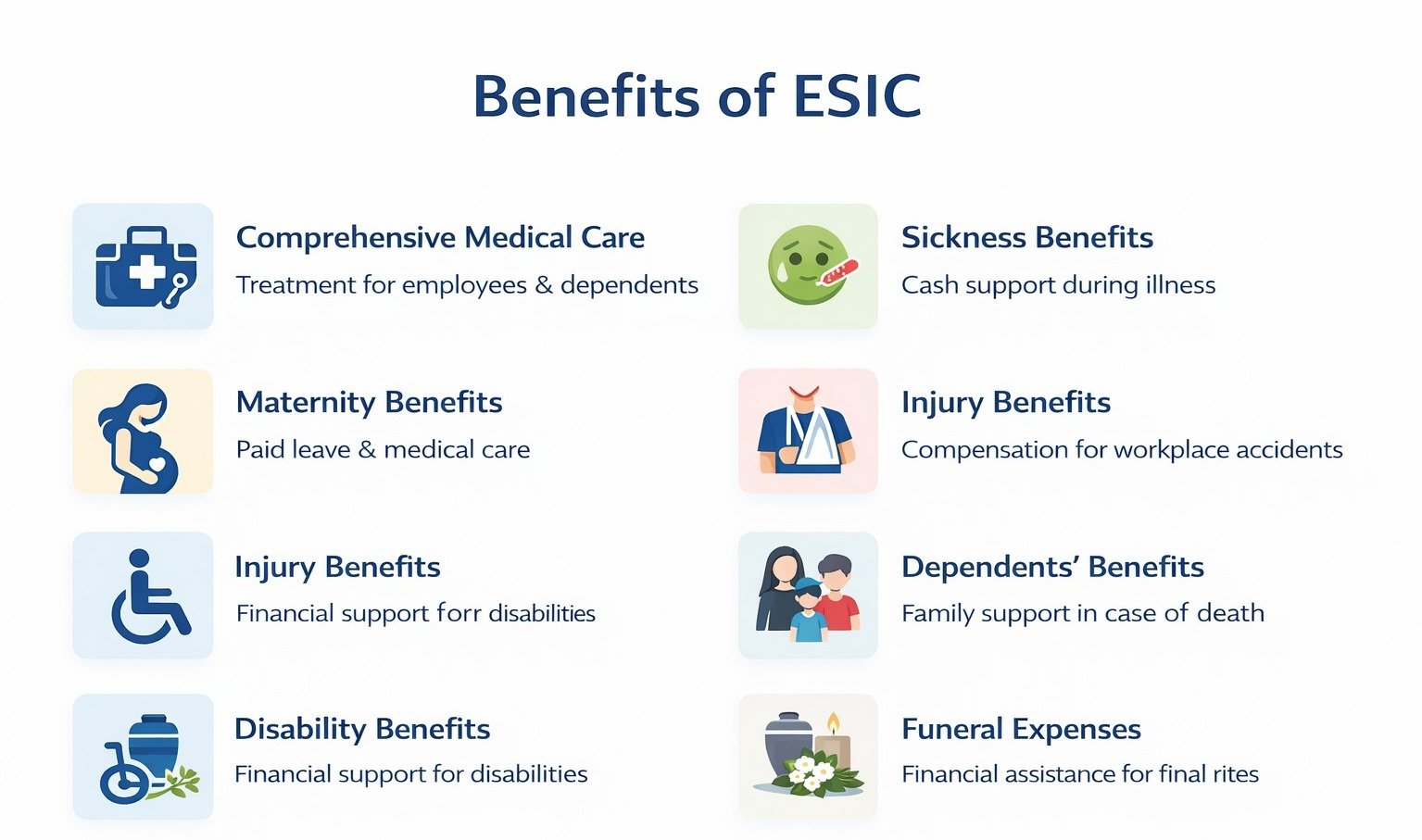
The Employees’ State Insurance (ESIC) scheme offers a comprehensive social security and health insurance framework that protects employees and supports employers in maintaining workplace welfare compliance. Key benefits include:
ESIC provides full medical treatment for employees and their dependents from the first day of employment, covering consultations, hospitalization, medicines, and specialist care.
Employees receive cash compensation during certified sickness periods, helping manage wage loss while recovering.
Female employees are entitled to paid maternity leave and medical care, covering pregnancy, childbirth, and related complications.
Employees suffering work-related injuries or occupational diseases receive medical care and cash compensation for temporary or permanent disability.
ESIC provides regular cash support for employees with temporary or permanent disabilities, ensuring livelihood protection.
In the event of an employee’s death due to employment injury, dependents receive periodic financial assistance.
ESIC covers funeral costs for the deceased insured employee, supporting their family during difficult times.
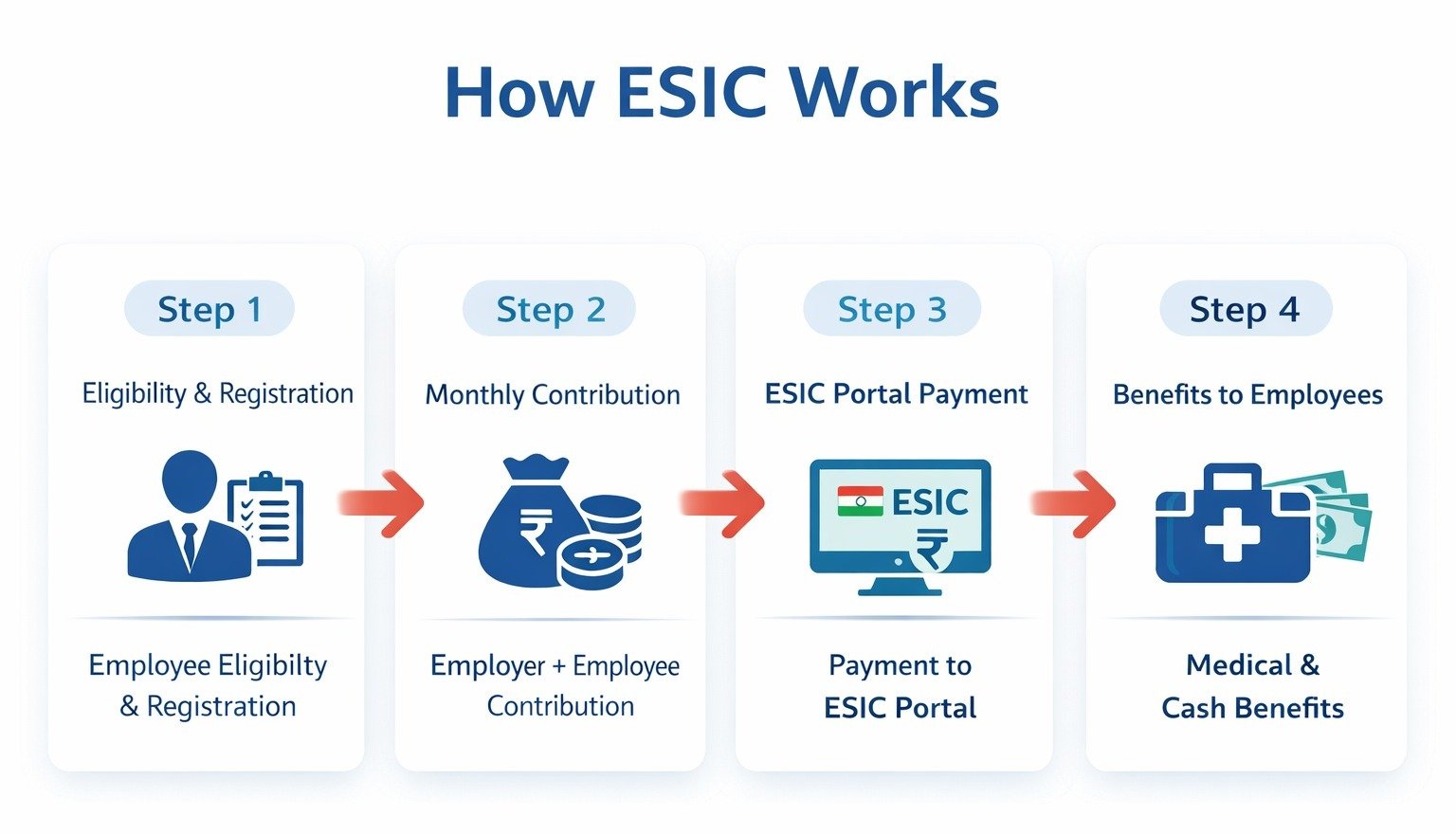
The Employees’ State Insurance (ESIC) scheme is a statutory social security and health insurance program that provides comprehensive protection to employees in India. Here’s how it works:
Employers enroll eligible employees under the ESIC scheme based on statutory wage limits. Establishments or factories with more than 10 employees must register for ESIC benefits to ensure mandatory social security compliance.
ESIC contributions are jointly made by employers (3.25%) and employees (0.75%) of the employee’s wages, ensuring continuous funding for medical and cash benefits.
Female employees are entitled to paid maternity leave and medical care, covering pregnancy, childbirth, and related complications.
Insured employees and their dependents receive comprehensive medical care and cash benefits during sickness, maternity, employment injury, or disability, providing financial security and workplace welfare.
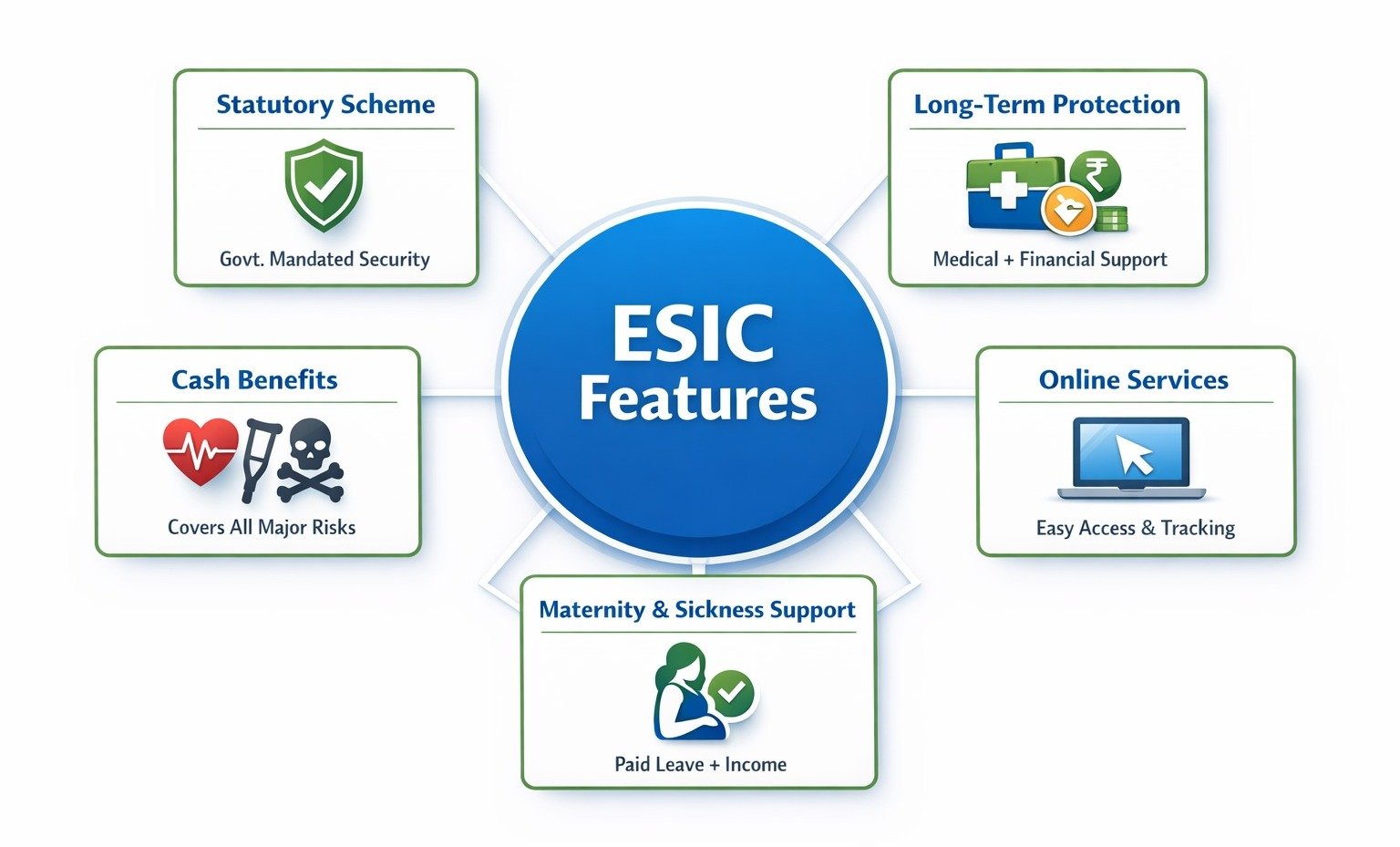
A government-mandated social security program providing health and financial benefits to eligible employees across India.
Safeguards employees and their dependents by offering sustained medical care and financial support during sickness, maternity, employment injury, or disability.
Provides monetary support for sickness, maternity, employment injury, disability, and death, ensuring financial security at the workplace.
Insured employees are entitled to paid maternity leave and cash benefits during certified illness, promoting employee welfare and workplace compliance.
ESIC offers digital services for registration, claim filing, and tracking, making it convenient for both employers and employees while ensuring compliance.

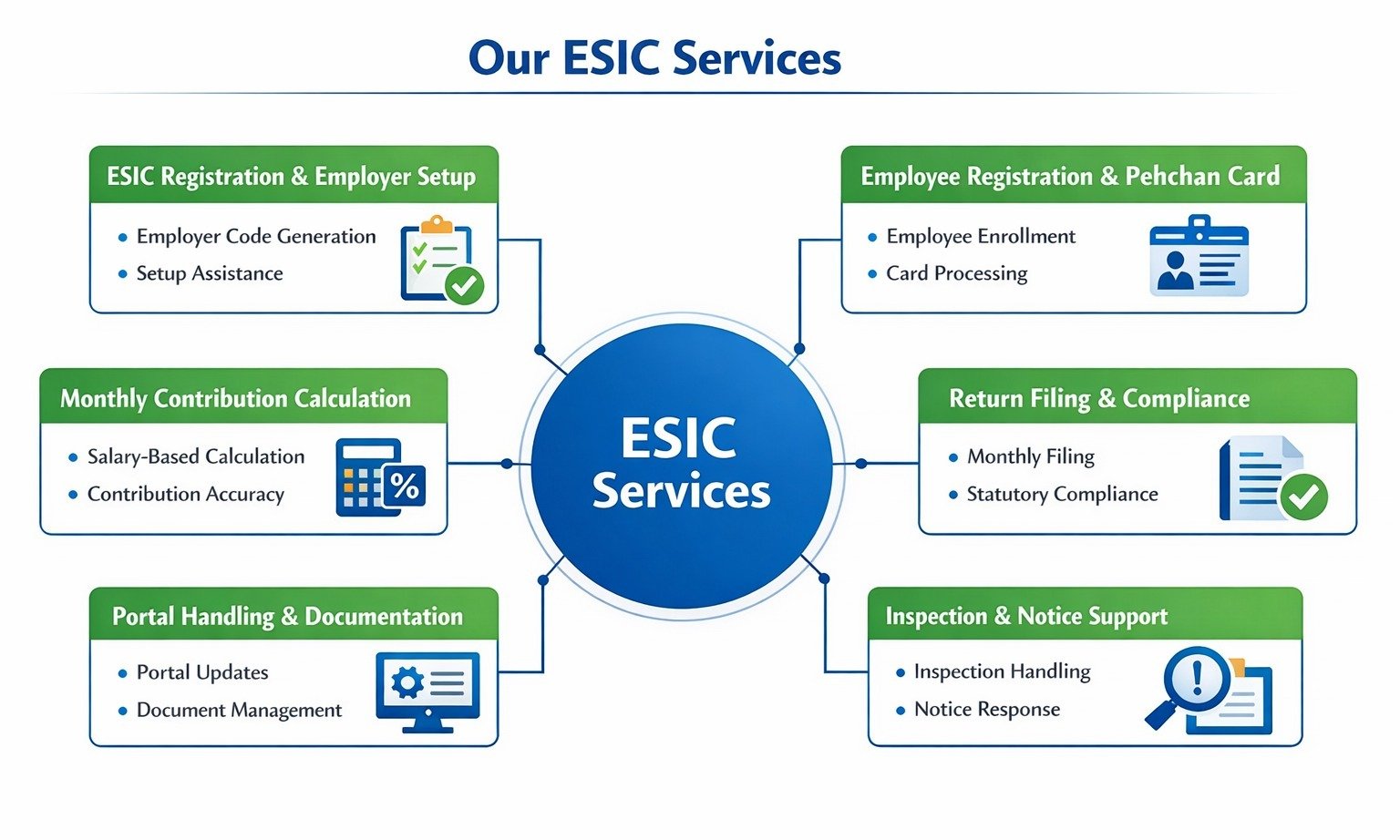
Employees’ State Insurance (ESI/ESIC) is a critical statutory scheme that provides healthcare, social security, and financial protection to employees and their families. At BIOS (Business India Outsourcing), we offer comprehensive ESI services, including employee registration, contribution management, record keeping, and timely statutory filings. Partnering with BIOS ensures full ESI compliance, streamlined processes, and secure employee welfare, allowing businesses to focus on growth while meeting their mandatory social security obligations.
“Empowering employees with security, ensuring businesses stay compliant.”

BIOS intends to be an organisation offering world class Quality, Reliable and Transparent service by being transcendent and to spread its wings and to soar to great heights.


© Copyright 2026 BIOS India
Designed by 
 First Floor, Ranjesha Building Kochapilly Appachan Lane, Opp POC Near NH Bypass Palarivattom Jn. Alinchuvadu, Edapally PO Ernakulam. Kerala
 Staffing Solutions
 Management Consulting